Learning similes for disgusting helps writers turn ordinary descriptions into vivid images that readers can quickly picture and understand clearly.
When we describe something that looks, smells, or feels bad, such as old food in the fridge or trash waiting to be taken out, a good comparison can make the idea stronger. When this happens, similes make ideas clearer because a simile uses words like and as to compare two things. This helps show how awful, gross, or disgusting an object can be. From my experience in teaching writing, I have seen how these comparisons help readers quickly understand the feeling being described.
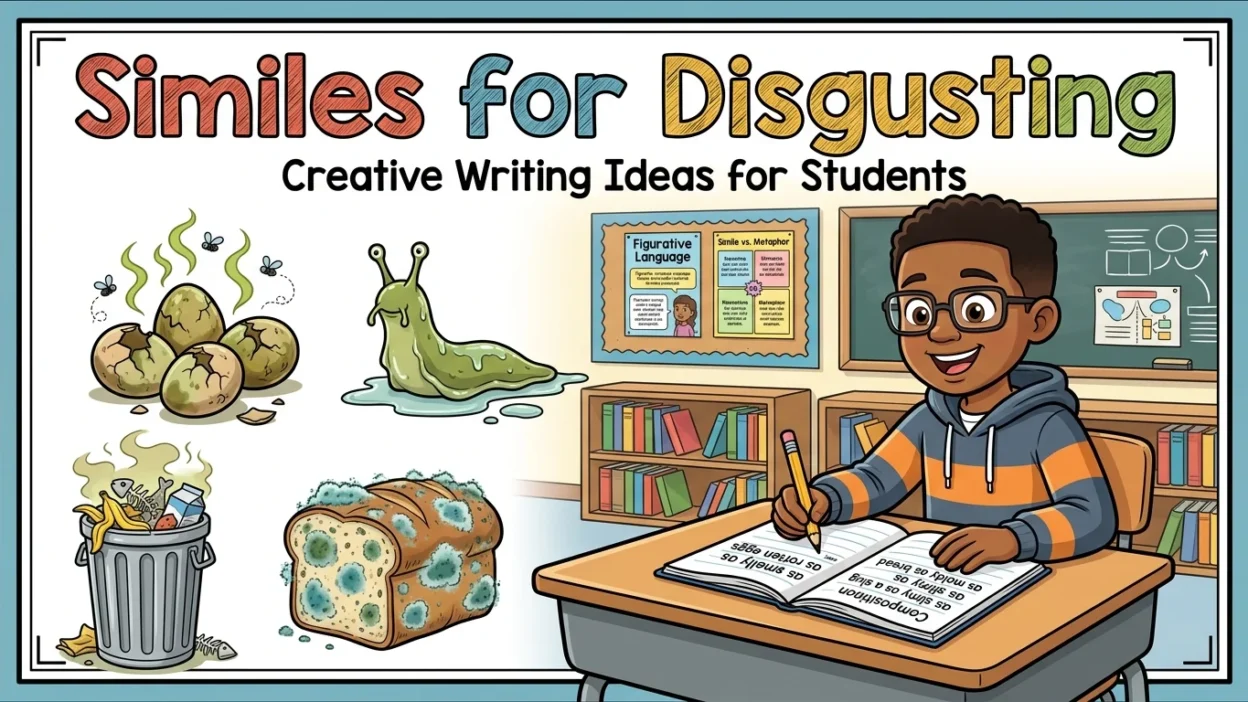
Many writers improve their stories because similes make reading more fun and easier to picture. For example, a writer may compare something to rotten eggs or describe it as slimy as a slug. These word pictures encourage readers to think and feel the scene more strongly. A skilled writer knows that a good comparison often means more than a simple description.
In this article, you will learn how funny and clear similes can help describe disgusting things in a memorable way. You also get a chance to practice using these comparisons in your own writing, making your descriptions more vivid and engaging.
1. As disgusting as rotten eggs
Meaning: Extremely unpleasant.
Explanation: Rotten eggs are famous for their terrible smell.
Example Sentences:
- The forgotten lunch smelled as disgusting as rotten eggs.
- The kitchen odor was as disgusting as rotten eggs.
2. As slimy as a slug
Meaning: Covered in a slippery substance.
Explanation: Slugs are often used to describe something unpleasantly slippery.
Example Sentences:
- The spoiled vegetables were as slimy as a slug.
- The wet surface felt as slimy as a slug.
3. Like garbage left in the sun
Meaning: Very foul-smelling.
Explanation: Garbage exposed to heat develops a strong odor.
Example Sentences:
- The room smelled like garbage left in the sun.
- The old container smelled like garbage left in the sun.
4. As nasty as a dirty drain
Meaning: Extremely dirty and unpleasant.
Explanation: Drains often collect grime and waste.
Example Sentences:
- The puddle looked as nasty as a dirty drain.
- The sink was as nasty as a dirty drain.
5. Like spoiled milk on a hot day
Meaning: Terribly unpleasant.
Explanation: Spoiled milk develops a strong smell quickly.
Example Sentences:
- The odor was like spoiled milk on a hot day.
- The container smelled like spoiled milk on a hot day.
6. As foul as a sewer
Meaning: Very offensive.
Explanation: Sewers are commonly associated with bad smells.
Example Sentences:
- The alley smelled as foul as a sewer.
- The garbage area was as foul as a sewer.
7. Like moldy bread forgotten for weeks
Meaning: Old and unpleasant.
Explanation: Mold creates a strong feeling of disgust.
Example Sentences:
- The sandwich looked like moldy bread forgotten for weeks.
- The leftovers appeared like moldy bread forgotten for weeks.
8. As gross as a maggot-covered bin
Meaning: Extremely disgusting.
Explanation: Maggots often trigger feelings of revulsion.
Example Sentences:
- The trash can was as gross as a maggot-covered bin.
- The corner looked as gross as a maggot-covered bin.
9. Like a swamp full of slime
Meaning: Dirty and unpleasant.
Explanation: Swamps often symbolize filth.
Example Sentences:
- The pond looked like a swamp full of slime.
- The water felt like a swamp full of slime.
10. As revolting as spoiled meat
Meaning: Highly disgusting.
Explanation: Spoiled meat is a common source of bad smells.
Example Sentences:
- The odor was as revolting as spoiled meat.
- The fridge smelled as revolting as spoiled meat.
11. As dirty as a pigsty
Meaning: Extremely dirty and messy.
Explanation: A pigsty is often associated with mud, clutter, and poor cleanliness.
Example Sentences:
- His room was as dirty as a pigsty after the party.
- The abandoned shed looked as dirty as a pigsty.
12. Like week-old leftovers
Meaning: Very unpleasant and stale.
Explanation: Leftovers that sit too long often develop bad smells and an unappetizing appearance.
Example Sentences:
- The smell in the container was like week-old leftovers.
- The spoiled food looked like week-old leftovers.
13. As unpleasant as sour milk
Meaning: Extremely disagreeable.
Explanation: Sour milk has a strong odor and taste that most people find unpleasant.
Example Sentences:
- The odor was as unpleasant as sour milk.
- The kitchen smelled as unpleasant as sour milk.
14. Like a trash heap in summer
Meaning: Very foul-smelling and disgusting.
Explanation: Hot weather makes trash produce stronger and more offensive odors.
Example Sentences:
- The alley smelled like a trash heap in summer.
- The garbage room was like a trash heap in summer.
15. As filthy as a muddy gutter
Meaning: Extremely dirty.
Explanation: Muddy gutters are often filled with dirt, waste, and stagnant water.
Example Sentences:
- The street corner was as filthy as a muddy gutter.
- His boots became as filthy as a muddy gutter after the storm.
16. Like mold growing on bread
Meaning: Unpleasantly dirty or spoiled.
Explanation: Mold on bread is a common sign of decay and contamination.
Example Sentences:
- The sandwich looked like mold growing on bread.
- The forgotten loaf appeared like mold growing on bread.
17. As stinky as old socks
Meaning: Very smelly.
Explanation: Old socks are often used as a humorous comparison for bad odors.
Example Sentences:
- The gym bag was as stinky as old socks.
- The locker room smelled as stinky as old socks.
18. Like rotten fruit in a box
Meaning: Extremely unpleasant in smell or appearance.
Explanation: Rotten fruit quickly develops a strong odor and unattractive look.
Example Sentences:
- The kitchen smelled like rotten fruit in a box.
- The spoiled basket looked like rotten fruit in a box.
19. As repulsive as spoiled fish
Meaning: Highly disgusting and offensive.
Explanation: Spoiled fish is known for its strong and unpleasant smell.
Example Sentences:
- The odor was as repulsive as spoiled fish.
- The market corner smelled as repulsive as spoiled fish.
20. Like a dumpster after rain
Meaning: Extremely foul and unpleasant.
Explanation: Rain can intensify the smell of waste inside a dumpster.
Example Sentences:
- The garbage area smelled like a dumpster after rain.
- The alley was like a dumpster after rain.
Practical Exercise: Identify the Simile
Questions
- Complete the simile: As slimy as a _______.
- Which simile describes a terrible smell?
- Complete the simile: As foul as a _______.
- Which simile compares something to spoiled food?
- Complete the simile: Like garbage left in the _______.
- Which simile means very dirty?
- Complete the simile: As stinky as old _______.
- Which simile involves a swamp?
- Complete the simile: As disgusting as rotten _______.
- Which simile describes something highly revolting?
Answers and Explanations
- Slug – Slugs are known for being slimy.
- Like garbage left in the sun – It describes a powerful bad smell.
- Sewer – Sewers are associated with foul odors.
- As revolting as spoiled meat – It uses spoiled food as a comparison.
- Sun – Heat makes garbage smell worse.
- As dirty as a pigsty – Pigsties are often associated with messiness.
- Socks – Old socks are known for bad smells.
- Like a swamp full of slime – Swamps can appear dirty and slimy.
- Eggs – Rotten eggs have a famous unpleasant odor.
- As revolting as spoiled meat – It emphasizes extreme disgust.
How to Create Your Own Disgusting Similes
Creating creative writing similes is simple.
- Think of something disgusting.
- Find an object that shares the same quality.
- Connect them with “like” or “as.”
For example:
- Bad smell → As foul as a sewer.
- Dirty appearance → As filthy as a muddy gutter.
- Slimy texture → As slimy as a slug.
This technique helps you create original simile sentences that readers can easily understand.
Conclusion
Similes are one of the easiest ways to make descriptions stronger and more memorable. They help readers see, smell, and imagine exactly what you mean. By learning these similes for disgusting, you can improve your creative writing and create more vivid scenes.
The best way to master similes is through practice. Try creating your own comparisons based on everyday experiences. The more examples of similes you study, the easier it becomes to recognize patterns and write powerful descriptions that connect with readers.