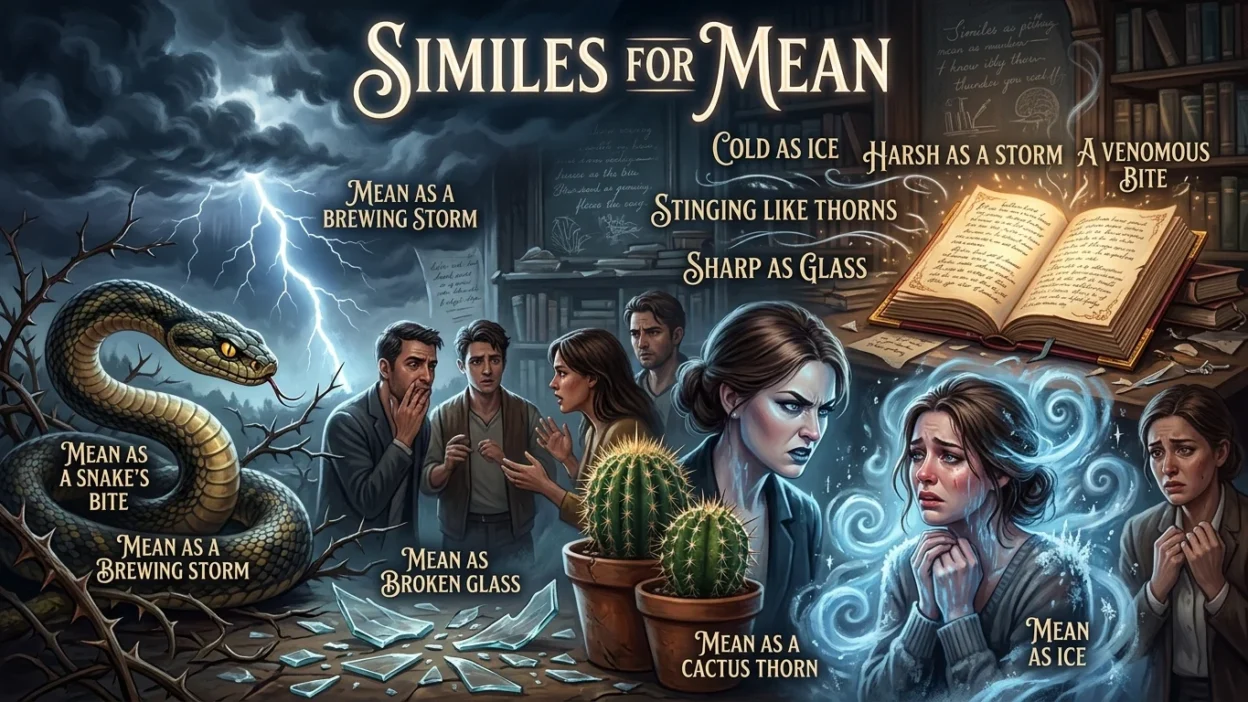
Many writers use similes for mean to explain rude actions and emotions in a simple but memorable way for readers today. In everyday conversations, people use similes and short phrases to compare two things with simple words such as like and as. These comparisons help readers understand feelings better by likening someone to something familiar. A famous example is as mean as a snake, which writers use to emphasize unkindness, a cold attitude, or a sharp attitude. I have noticed that students quickly connect with this kind of figurative language because it adds color to language and makes lessons more interesting to listen to and read. Similes also paint pictures in the mind, helping others visualize actions, emotions, and detailed descriptions in a natural way that creates a lively article and an engaging article while describing meanness in a memorable way.
A good simile helps people communicate a difficult concept more effectively through regular practice and careful crafting. This creative tool allows learners to discover how words can connect with the world around them. When readers work together to explore different similes, they become more adept at saying feelings clearly and helping others understand something complex. In my experience, similes improve language skills, communication, and emotional expressions because they help readers visualize meaning through strong descriptive phrases, emotional depth, and clear emotional tone. Examples connected to human behavior, personality traits, negative attitude, harsh nature, and rude behavior are especially useful in expressive writing because they reflect daily life situations.
Strong writers depend on creative comparisons, expressive speech, and each literary device to improve message quality and emotional impact. Powerful comparison words and vivid imagery strengthen communication skills in reading, writing, and everyday conversation. Every richer description gains more expression, imagination, and thoughtful storytelling through a clear explanation of emotions and actions. I often encourage learners to focus on semantic meaning, contextual language, and vivid expression because these improve social interaction, emotional expression, and accurate interpretation. Similes also develop creative analogy skills through metaphorical thinking, stronger sentence structure, and wider vocabulary. Over time, this naturally expands vocabulary and builds better expressive communication. Each illustration and relation between a snake, an unkind person, or a cruel person can reveal a harsh mean personality filled with harsh words. That is why creative language remains a useful communication tool for building engaging language and meaningful descriptive communication.
1. As mean as a snake
Meaning
Someone who is cruel, cold, or unkind.
What It Conveys
This simile compares a mean person to a snake because snakes are often linked with danger and betrayal.
Example Sentences
- The bully was as mean as a snake during recess.
- Her words sounded as mean as a snake’s hiss.
2. Like a storm with no warning
Meaning
Someone who suddenly becomes angry or hurtful.
What It Conveys
It shows unexpected meanness that shocks others.
Example Sentences
- Dad’s temper hit like a storm with no warning.
- She spoke like a storm with no warning at dinner.
3. As cold as ice
Meaning
Emotionally distant and uncaring.
What It Conveys
This simile shows a lack of kindness or warmth.
Example Sentences
- His reply was as cold as ice.
- The teacher’s stare felt as cold as ice.
4. Like a barking dog
Meaning
Loud, rude, and aggressive.
What It Conveys
It suggests harsh words and angry behavior.
Example Sentences
- He shouted like a barking dog all morning.
- The customer acted like a barking dog in the store.
5. As sharp as broken glass
Meaning
Very hurtful in speech or attitude.
What It Conveys
It highlights painful and cutting words.
Example Sentences
- Her comments were as sharp as broken glass.
- His tone sounded as sharp as broken glass.
6. Like a thorn in the side
Meaning
Someone annoying or constantly hurtful.
What It Conveys
It shows irritation and emotional pain.
Example Sentences
- The rude neighbor was like a thorn in the side.
- His teasing felt like a thorn in the side.
7. As bitter as black coffee
Meaning
Full of anger or negativity.
What It Conveys
It compares a person’s attitude to a strong bitter taste.
Example Sentences
- She sounded as bitter as black coffee.
- His mood stayed as bitter as black coffee all week.
8. Like a wolf hunting prey
Meaning
Aggressive and cruel toward others.
What It Conveys
This simile shows someone acting without mercy.
Example Sentences
- The bully circled like a wolf hunting prey.
- She stared at him like a wolf hunting prey.
9. As hard as stone
Meaning
Without sympathy or kindness.
What It Conveys
It describes emotional coldness.
Example Sentences
- His heart seemed as hard as stone.
- The judge looked as hard as stone.
10. Like poison in water
Meaning
Quietly harmful or toxic.
What It Conveys
It suggests hidden meanness.
Example Sentences
- Her gossip spread like poison in water.
- His lies worked like poison in water.
11. As cruel as a hunter
Meaning
Very harsh and uncaring.
What It Conveys
It compares cruelty to someone chasing prey.
Example Sentences
- The villain was as cruel as a hunter.
- Her behavior felt as cruel as a hunter’s trap.
12. Like sandpaper on skin
Meaning
Rough and unpleasant.
What It Conveys
It describes words or actions that hurt emotionally.
Example Sentences
- His insults felt like sandpaper on skin.
- Her attitude rubbed me like sandpaper on skin.
13. As dark as a thundercloud
Meaning
Filled with anger or negativity.
What It Conveys
It creates a gloomy emotional image.
Example Sentences
- His face looked as dark as a thundercloud.
- She entered the room as dark as a thundercloud.
14. Like fire that burns everything
Meaning
Destructive and damaging.
What It Conveys
It shows meanness hurting everyone nearby.
Example Sentences
- Her anger spread like fire that burns everything.
- His rude words acted like fire that burns everything.
15. As rough as a cactus
Meaning
Harsh and difficult to deal with.
What It Conveys
It compares a person to something prickly and painful.
Example Sentences
- The coach sounded as rough as a cactus.
- Her personality was as rough as a cactus.
16. Like a crow stealing food
Meaning
Sneaky and selfish.
What It Conveys
It suggests dishonest and mean behavior.
Example Sentences
- He grabbed the credit like a crow stealing food.
- She acted like a crow stealing food at work.
17. As nasty as spoiled milk
Meaning
Very unpleasant or rude.
What It Conveys
It compares bad behavior to something rotten.
Example Sentences
- His attitude was as nasty as spoiled milk.
- The argument turned as nasty as spoiled milk.
18. Like thunder shaking windows
Meaning
Loud and frightening.
What It Conveys
It describes aggressive behavior.
Example Sentences
- Her yelling sounded like thunder shaking windows.
- The coach roared like thunder shaking windows.
19. As unfriendly as a locked gate
Meaning
Distant and unwelcoming.
What It Conveys
It shows emotional distance.
Example Sentences
- The manager seemed as unfriendly as a locked gate.
- His smile was as unfriendly as a locked gate.
20. Like a knife in the dark
Meaning
Secretly hurtful or dangerous.
What It Conveys
It describes hidden betrayal or emotional pain.
Example Sentences
- Her betrayal felt like a knife in the dark.
- His joke landed like a knife in the dark.
Practical Exercise
Questions
- Complete the simile: “As mean as a ______.”
- Which simile describes hidden harm?
- What does “as cold as ice” mean?
- Fill in the blank: “Like thunder shaking ______.”
- Which simile compares a rude person to something prickly?
- What feeling does “as dark as a thundercloud” create?
- Which simile suggests betrayal?
- Complete the phrase: “Like a thorn in the ______.”
- Which simile means emotionally distant?
- Write your own simile for mean behavior.
Answers With Explanations
- Snake — It describes a cruel or dangerous person.
- Like poison in water — It suggests quiet emotional harm.
- It means emotionally cold or uncaring.
- Windows — It creates a loud and frightening image.
- As rough as a cactus — A cactus is sharp and painful.
- It creates a gloomy and angry mood.
- Like a knife in the dark — It represents hidden betrayal.
- Side — It means constant annoyance or pain.
- As cold as ice — It shows lack of emotion.
- Answers may vary. Example: “As mean as a wasp protecting its nest.”
Conclusion
Learning the meaning of similes can make your writing more creative and emotional. Similes help readers picture feelings and actions in a simple way. Whether you are writing stories, poems, or school assignments, simile sentences can make your words more powerful and memorable.
You might say similes are small comparisons with a big impact. The more examples of similes you read, the easier it becomes to create your own. Try using creative writing similes in your daily writing practice and explore how to use similes in writing with confidence.