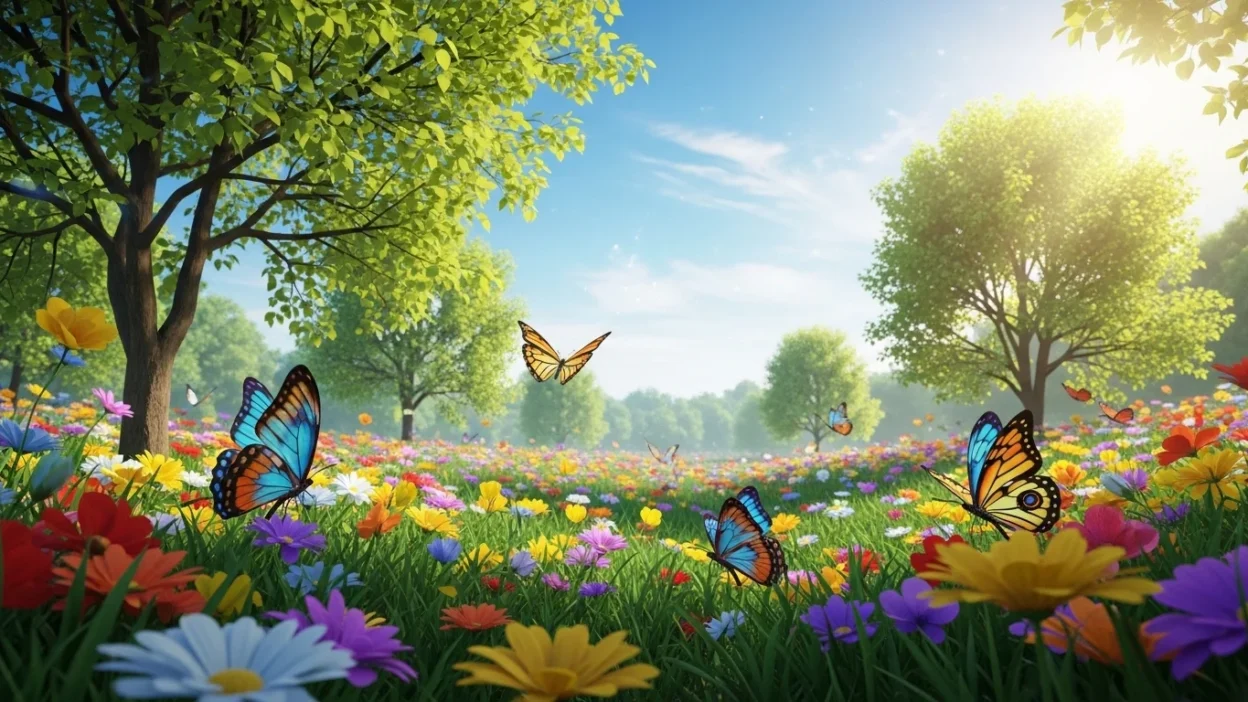
Have you ever noticed how writers describe spring in such colorful ways? They don’t just say, “Spring is nice.” Instead, they say things like, “Spring is like a fresh start.” That’s a simile.
In simple terms, a simile is a comparison that uses the words “like” or “as.” It helps us compare two different things in a creative way. For example, “The sky is as blue as the ocean.” That comparison paints a picture in your mind.
Similes make writing more fun and powerful. They help readers see, feel, and imagine. In creative writing, similes bring life to simple sentences. If you want to improve your writing skills, learning how to use similes in writing is a great first step.
Let’s explore similes for spring, their meanings, and how you can use them in your own simile sentences.
1. Spring is like a fresh start.
Meaning: Spring feels new and full of hope.
What it conveys: Renewal and new beginnings.
Examples:
- After a hard year, this season feels like a fresh start.
- The garden in April is like a fresh start for the earth.
2. Spring is as gentle as a soft breeze.
Meaning: Spring feels calm and light.
What it conveys: Peace and comfort.
Examples:
- The morning air was as gentle as a soft breeze.
- Her voice in April sounded as gentle as spring.
3. Spring blooms like a smiling child.
Meaning: Flowers open happily.
What it conveys: Joy and innocence.
Examples:
- The roses bloomed like a smiling child.
- The park blooms like a smiling child in April.
4. Spring shines like a golden sunrise.
Meaning: Spring looks bright and warm.
What it conveys: Light and warmth.
Examples:
- The fields shine like a golden sunrise.
- Her happiness glowed like a spring sunrise.
5. Spring feels as fresh as morning dew.
Meaning: The air feels clean and cool.
What it conveys: Freshness and purity.
Examples:
- The grass felt as fresh as morning dew.
- His new idea was as fresh as spring dew.
6. Spring spreads like a colorful painting.
Meaning: Colors appear everywhere.
What it conveys: Beauty and art.
Examples:
- Flowers spread like a colorful painting.
- The valley looked like a painting in spring.
7. Spring dances like butterflies in the sun.
Meaning: Spring feels lively and active.
What it conveys: Energy and movement.
Examples:
- The petals danced like butterflies in the sun.
- The children ran like butterflies in spring.
8. Spring sings like birds at dawn.
Meaning: The season is full of happy sounds.
What it conveys: Music and life.
Examples:
- The trees sang like birds at dawn.
- The forest sings like birds each spring morning.
9. Spring is as colorful as a rainbow.
Meaning: Many bright colors appear.
What it conveys: Variety and joy.
Examples:
- The garden is as colorful as a rainbow.
- Her dress was as colorful as spring flowers.
10. Spring grows like hope in the heart.
Meaning: Spring builds positivity.
What it conveys: Optimism.
Examples:
- Flowers grow like hope in the heart.
- His dreams grew like spring plants.
11. Spring is like a soft whisper.
Meaning: The season arrives quietly.
What it conveys: Calm and subtle beauty.
Examples:
- Spring arrived like a soft whisper.
- The wind moved like a whisper through trees.
12. Spring sparkles like sunlight on water.
Meaning: Everything looks bright.
What it conveys: Shine and clarity.
Examples:
- The river sparkled like sunlight on water.
- Her eyes sparkled like spring light.
13. Spring feels as light as a feather.
Meaning: The season feels airy.
What it conveys: Lightness and ease.
Examples:
- My mood felt as light as a feather.
- The breeze was as light as spring air.
14. Spring opens like a blooming flower.
Meaning: The season slowly reveals beauty.
What it conveys: Growth and change.
Examples:
- The world opened like a blooming flower.
- Her smile opened like spring petals.
15. Spring is like a painter with bright colors.
Meaning: Nature adds many colors.
What it conveys: Creativity.
Examples:
- Spring is like a painter with bright colors.
- The hills looked painted by spring.
16. Spring arrives like a happy surprise.
Meaning: It brings unexpected joy.
What it conveys: Excitement.
Examples:
- Spring arrived like a happy surprise.
- The warm day felt like a surprise gift.
17. Spring is as sweet as blooming roses.
Meaning: The air smells pleasant.
What it conveys: Sweetness.
Examples:
- The air was as sweet as blooming roses.
- Her laugh was as sweet as spring flowers.
18. Spring flows like a clear stream.
Meaning: The season moves smoothly.
What it conveys: Calm progress.
Examples:
- Time flows like a clear stream in spring.
- The days passed like water in April.
19. Spring glows like a warm smile.
Meaning: Spring feels comforting.
What it conveys: Warmth and kindness.
Examples:
- The garden glowed like a warm smile.
- The sky glowed like spring joy.
20. Spring rises like the sun after rain.
Meaning: Spring follows cold winter.
What it conveys: Renewal after hardship.
Examples:
- Spring rises like the sun after rain.
- Hope rises like spring after winter.
Practical Exercise
Questions
- Spring is like _________.
- The flowers opened like _________.
- Spring feels as fresh as _________.
- Is this a simile? “Spring is a colorful painting.”
- Complete: The breeze moved like _________.
- Identify the comparison in: “Spring shines like a golden sunrise.”
- Write your own simile about spring.
- Is this a simile? “The birds sing sweet songs.”
- Complete: Spring grows like _________.
- What words usually show a sentence is a simile?
Answers with Explanation
- A fresh start (compares spring to renewal).
- A smiling child (compares flowers to happiness).
- Morning dew (shows freshness).
- No. It’s a metaphor (no “like” or “as”).
- A soft whisper (shows gentle movement).
- Spring is compared to a golden sunrise.
- Example: Spring is as bright as a rainbow.
- No. No comparison word used.
- Hope in the heart (shows positivity).
- The words “like” and “as.”
Conclusion
Now you understand the meaning of similes and how to use them in writing. Similes make your sentences brighter, clearer, and more creative. They help readers imagine what you see and feel.
If you want to improve your creative writing similes, start small. Look at nature. Compare things. Use “like” or “as.” You might say, “Spring is like a promise of new beginnings.”
The more you practice, the better your simile sentences will become.
So go ahead — try writing your own similes for spring today!