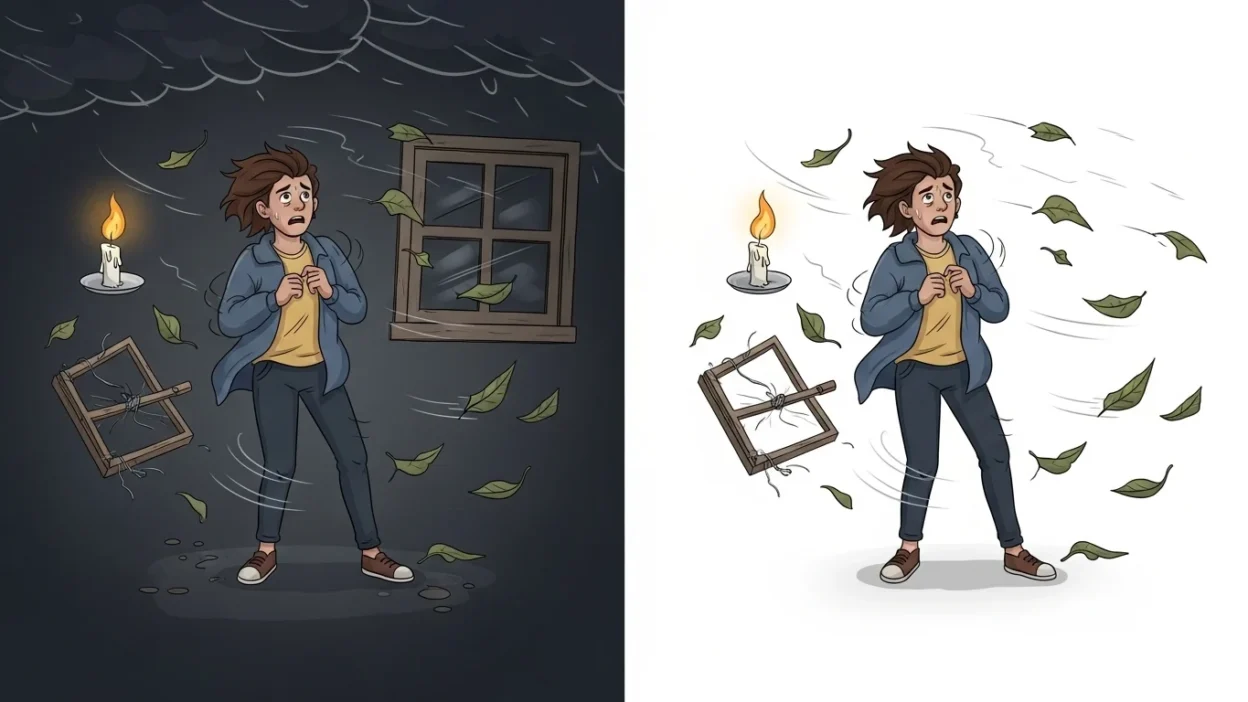
Have you ever been so scared that your hands started to shake? Maybe before a big exam. Or during a loud storm. Fear can make your body tremble. But how do you describe that feeling in a strong way? That’s where similes help.
In simple terms, a simile is when you compare two things using the words “like” or “as.” For example, instead of saying “He was very scared,” you might say, “He was shaking like a leaf in the wind.” That one small change makes your writing more powerful.
Some people ask about a strohl simile. This is not a grammar rule. Writers use this phrase to describe a strong and vivid simile that creates a clear image in the reader’s mind. It makes the fear feel real.
If you want better creative writing similes, you need clear examples of similes and real simile sentences. So let’s explore 36 strong similes for shaking with fear and learn how to use similes in writing.
1. He was shaking like a leaf in the wind.
Meaning: Very frightened.
What it conveys: Light, uncontrollable trembling.
Example 1: He was shaking like a leaf in the wind during the storm.
Example 2: I stood shaking like a leaf before my speech.
2. She trembled like a rabbit in front of a wolf.
Meaning: Extremely scared.
What it conveys: Helpless fear.
Example 1: She trembled like a rabbit in front of a wolf.
Example 2: The boy looked like a rabbit facing danger.
3. He shook like a loose window in a storm.
Meaning: Shaking hard and fast.
What it conveys: Strong fear.
Example 1: He shook like a loose window in a storm.
Example 2: Her hands rattled like glass in heavy wind.
4. She quivered like a cold puppy.
Meaning: Small, soft shaking.
What it conveys: Weak and scared feelings.
Example 1: She quivered like a cold puppy in the dark.
Example 2: The child stood like a cold puppy at night.
5. He shook as if he were made of jelly.
Meaning: Weak from fear.
What it conveys: Loss of control.
Example 1: His legs shook as if he were made of jelly.
Example 2: I felt like jelly when I saw the shadow.
6. She trembled like a phone on silent mode.
Meaning: Quick, steady shaking.
What it conveys: Hidden fear.
Example 1: She trembled like a phone on silent during the test.
Example 2: His body buzzed like a silent phone.
7. He shook like paper in the wind.
Meaning: Light but visible trembling.
What it conveys: Nervous fear.
Example 1: He shook like paper in the wind.
Example 2: My hands felt like paper in a breeze.
8. She quaked like the ground before an earthquake.
Meaning: Deep, strong shaking.
What it conveys: Intense fear.
Example 1: She quaked like the ground before an earthquake.
Example 2: His body felt like the earth was moving.
9. He trembled like a candle flame.
Meaning: Small, flickering movement.
What it conveys: Fragile fear.
Example 1: He trembled like a candle flame in the dark.
Example 2: Her voice shook like a tiny flame.
10. She shook like a drum in a parade.
Meaning: Loud, strong shaking.
What it conveys: Noticeable fear.
Example 1: She shook like a drum in a parade.
Example 2: His heart beat like a loud drum.
11. He trembled like a mouse in a trap.
Meaning: Trapped and scared.
What it conveys: Fear with no escape.
Example 1: He trembled like a mouse in a trap.
Example 2: She felt like a trapped mouse in the room.
12. She shook like a tree in a hurricane.
Meaning: Violent shaking.
What it conveys: Extreme fear.
Example 1: She shook like a tree in a hurricane.
Example 2: His body swayed like a tree in heavy wind.
13. He trembled like ice about to crack.
Meaning: Fear close to breaking point.
What it conveys: Tension.
Example 1: He trembled like ice about to crack.
Example 2: She felt like thin ice under pressure.
14. She quivered like a string pulled tight.
Meaning: Tight with fear.
What it conveys: Stress and tension.
Example 1: She quivered like a string pulled tight.
Example 2: His nerves felt like tight strings.
15. He shook like a washing machine on spin.
Meaning: Fast, strong shaking.
What it conveys: Overwhelming fear.
Example 1: He shook like a washing machine on spin.
Example 2: My legs rattled like a machine spinning.
16. She trembled like a feather in a storm.
Meaning: Light and helpless shaking.
What it conveys: Weakness.
Example 1: She trembled like a feather in a storm.
Example 2: His body felt like a feather in the wind.
17. He quaked like thunder before lightning.
Meaning: Fear before danger.
What it conveys: Warning feeling.
Example 1: He quaked like thunder before lightning.
Example 2: She felt fear like thunder in the sky.
18. She shook like a bell being rung.
Meaning: Repeated shaking.
What it conveys: Visible fear.
Example 1: She shook like a bell being rung.
Example 2: His hands rang like a bell in motion.
19. He trembled like a fish out of water.
Meaning: Panic and fear.
What it conveys: Struggle.
Example 1: He trembled like a fish out of water.
Example 2: She gasped like a fish on dry land.
20. She shook like leaves before a storm.
Meaning: Fear before something bad.
What it conveys: Nervous tension.
Example 1: She shook like leaves before a storm.
Example 2: His body felt like leaves waiting for wind.
Practical Exercise
Questions
- “He was shaking like a leaf.”
- “She trembled like a candle flame.”
- “He shook like a washing machine.”
- “She quivered like a tight string.”
- “He trembled like a mouse in a trap.”
- He was shaking like a _______ in the wind.
- She trembled like a _______ flame.
- He quaked like the ground before an _______.
- She shook like a bell being _______.
- He trembled like a fish out of _______.
Answers with Explanation
- I am very scared and nervous.
- Small, fragile fear.
- Strong and fast shaking.
- Tight tension.
- Trapped fear.
- Leaf – shows light shaking.
- Candle – shows soft trembling.
- Earthquake – shows deep fear.
- Rung – shows repeated shaking.
- Water – shows panic and struggle.
Conclusion
Similes help readers feel fear, not just read about it. The meaning of similes is simple — compare using “like” or “as.” But the effect is strong. They make creative writing similes powerful and clear.
Now you have many examples of similes for shaking with fear. You learned how to use similes in writing and how to build your own simile sentences. Try creating three today. For example, you might say, “I shook like a candle in the wind.”
Practice daily. Your writing will grow stronger and more vivid.