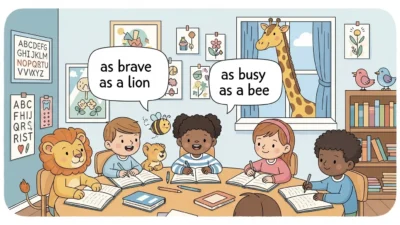
When you write about strong emotions, simple words sometimes feel too weak. That’s where similes help.
In simple terms, a simile is a comparison between two different things using the words “like” or “as.” Writers use similes to make descriptions clearer and more vivid. Instead of saying someone feels hate, you might say “his anger burned like fire.” Suddenly, the reader can imagine the feeling more clearly.
Similes are very useful in creative writing because they turn basic sentences into powerful images. They help readers understand emotions such as love, fear, jealousy, and even hate. For example, you might say hate spreads “like poison in the veins.”
If you’re learning how to use similes in writing, the best way is to see examples and practice using them in sentences.
In this guide, we will explore 36 similes for hate, their meanings, and how they work in context. By the end, you’ll understand the meaning of similes, see clear simile sentences, and learn how to create your own comparisons in writing.
So let’s explore these examples of similes together.
1. Hate burned like fire in his chest
Meaning: Strong and intense hate.
Explanation: Fire spreads quickly and burns strongly, just like deep anger or hate.
Example Sentences
- His hatred burned like fire in his chest after the betrayal.
- She felt anger like fire rising in her heart.
2. Hate spread like poison in the veins
Meaning: Hate slowly damages thoughts and emotions.
Explanation: Poison harms the body, just as hate harms the mind.
Example Sentences
- The rumors spread like poison in the veins of the community.
- His resentment grew like poison in his heart.
3. Hate was as cold as ice
Meaning: Emotionless or bitter hate.
Explanation: Ice represents coldness and lack of warmth.
Example Sentences
- His voice sounded as cold as ice when he spoke.
- Her glare was as cold as ice.
4. Hate grew like weeds in a garden
Meaning: Hate grows quickly if ignored.
Explanation: Weeds spread fast and ruin a garden.
Example Sentences
- Their rivalry grew like weeds in a garden.
- Anger spreads like weeds after rain.
5. Hate struck like lightning
Meaning: Sudden and powerful hate.
Explanation: Lightning appears suddenly and violently.
Example Sentences
- Rage hit him like lightning in a storm.
- The insult sparked hate like lightning in the sky.
6. Hate followed him like a dark shadow
Meaning: Hate never leaves someone.
Explanation: Shadows always follow a person.
Example Sentences
- The memory followed him like a dark shadow.
- Bitterness stayed like a shadow behind him.
7. Hate boiled like water on a stove
Meaning: Anger rising strongly.
Explanation: Boiling water represents rising tension.
Example Sentences
- His anger boiled like water on a stove.
- Rage bubbled like a pot about to spill.
8. Hate spread like wildfire
Meaning: Hate spreads quickly among people.
Explanation: Wildfires move fast and are hard to stop.
Example Sentences
- The argument spread like wildfire through the group.
- The rumor fueled hate like wildfire in dry grass.
9. Hate was as sharp as a knife
Meaning: Words or feelings that hurt deeply.
Explanation: A knife cuts quickly and painfully.
Example Sentences
- Her words were as sharp as a knife.
- His insult felt like a blade cutting deep.
10. Hate grew like a storm in the sky
Meaning: Hate building slowly until it explodes.
Explanation: Storms slowly gather power.
Example Sentences
- Anger gathered like a storm in the sky.
- Their fight grew like clouds before thunder.
11. Hate clung like mud on shoes
Meaning: Hard to remove hate.
Explanation: Mud sticks stubbornly.
Example Sentences
- Bitterness stuck like mud on his shoes.
- The memory stayed like dirt that would not wash away.
12. Hate burned like acid
Meaning: Hate that destroys emotions.
Explanation: Acid slowly destroys materials.
Example Sentences
- His jealousy burned like acid inside him.
- The betrayal hurt like acid on the skin.
13. Hate roared like thunder
Meaning: Loud and powerful anger.
Explanation: Thunder represents strong energy.
Example Sentences
- His voice roared like thunder in the hall.
- The argument sounded like thunder in the room.
14. Hate froze the room like winter
Meaning: Hate creating tension.
Explanation: Winter represents cold silence.
Example Sentences
- Their silence froze the room like winter.
- The tension felt like a cold winter night.
15. Hate spread like smoke
Meaning: Hate moving quietly and slowly.
Explanation: Smoke spreads into every corner.
Example Sentences
- Suspicion spread like smoke in the air.
- The bad feeling moved like smoke through the room.
16. Hate exploded like a volcano
Meaning: Sudden intense anger.
Explanation: Volcanoes erupt suddenly and violently.
Example Sentences
- His temper exploded like a volcano.
- The argument erupted like lava from the earth.
17. Hate hung like a dark cloud
Meaning: Constant negative feeling.
Explanation: Dark clouds represent sadness or tension.
Example Sentences
- Silence hung like a dark cloud above them.
- Bitterness stayed like storm clouds overhead.
18. Hate bit like a snake
Meaning: Hate that hurts suddenly.
Explanation: Snake bites are quick and painful.
Example Sentences
- His insult was a bit like a snake.
- The comment stung like a snake’s strike.
19. Hate was as heavy as stone
Meaning: Strong emotional burden.
Explanation: Stones represent weight and pressure.
Example Sentences
- His anger felt as heavy as stone.
- The silence weighed like a rock on his chest.
20. Hate spread like rust on metal
Meaning: Hate slowly destroys relationships.
Explanation: Rust slowly damages metal.
Example Sentences
- Resentment spread like rust on metal.
- Their friendship faded like iron eaten by rust.
Practical Exercise
Questions
- Complete the simile: Hate burned like ______.
- Complete: Hate spread like ______ in dry grass.
- Identify the simile: “His anger boiled like water.”
- What words usually signal a simile?
- Complete: Hate was as cold as ______.
- Is this a simile? “Her words cut like a knife.”
- Complete: Hate followed him like a ______.
- Identify the simile word in this sentence: “The tension hung like a dark cloud.”
- Complete: Hate exploded like a ______.
- Write your own simile describing hate.
Answers with Explanations
- Fire – Fire represents intense emotion.
- Wildfire – Shows fast spreading hate.
- Boiled like water – The comparison uses “like.”
- Like or As – These words show comparison.
- Ice – Ice represents cold feelings.
- Yes – The comparison uses “like.”
- Shadow – Hate follows constantly.
- Like – This signals the simile.
- Volcano – Represents sudden anger.
- Any creative comparison using like or as.
Conclusion
Similes help writers turn strong emotions into clear and powerful images. When describing feelings like hate similes make writing more vivid and meaningful.
For example, instead of simply saying someone feels hate, you might say it spreads like wildfire, burns like fire, or hangs like a dark cloud. These comparisons help readers imagine the emotion more clearly.
If you want to improve your creative writing, start practicing similes in everyday sentences. Look at nature, objects, or actions around you and compare them to emotions. With practice, creating examples of similes will become easy, and your writing will feel more alive and expressive.