Have you ever tried to describe something very dry in your writing? Maybe it was dry weather, dry skin, or even dry humor. Simply saying “It was dry” can feel a bit plain. This is where similes make writing more interesting and creative.
In simple terms, a simile compares two things using the words “like” or “as.” These comparisons help readers picture what you mean. For example, instead of saying “The desert was dry,” you might say “The desert was as dry as a bone.” Right away, the reader can imagine the dryness more clearly.
Writers use creative writing similes to add life and detail to their sentences. They help readers understand feelings, weather, places, and even personalities. For example, a writer might describe dry land, dry skin, or even dry humor using vivid comparisons.
In this guide, we’ll explore similes for dry, look at many examples of similes, and learn how to use similes in writing. You’ll also see simile sentences that show these comparisons in real context. At the end, there’s a short exercise to help you practice identifying and creating your own similes.
Let’s explore these creative comparisons together!
1. As dry as a bone
Meaning: Extremely dry.
Explanation: A bone has no moisture, making it a perfect comparison.
Example sentences
- The desert ground was as dry as a bone after months without rain.
- My throat felt as dry as a bone after the long speech.
2. As dry as dust
Meaning: Completely lacking moisture.
Explanation: Dust is powdery and dry.
Example sentences
- The old road looked as dry as dust in the summer heat.
- His lips were as dry as dust after the hike.
3. Like a desert in summer
Meaning: Extremely hot and dry.
Explanation: Deserts are known for intense dryness.
Example sentences
- The land felt like a desert in summer without rain.
- My mouth was like a desert in summer after the race.
4. As dry as sand
Meaning: Very lacking moisture.
Explanation: Sand does not hold much water.
Example sentences
- The soil felt as dry as sand beneath my feet.
- The bread tasted as dry as sand.
5. Like a dried leaf
Meaning: Brittle and dry.
Explanation: Leaves become fragile when dry.
Example sentences
- Her skin felt like a dried leaf in the cold weather.
- The paper crumbled like a dried leaf.
6. As dry as old paper
Meaning: Extremely dry and rough.
Explanation: Old paper becomes stiff and dry.
Example sentences
- The air in the room was as dry as old paper.
- His hands felt as dry as old paper.
7. Like a forgotten sponge
Meaning: Completely dried out.
Explanation: A sponge left out loses all moisture.
Example sentences
- The towel felt like a forgotten sponge in the sun.
- My throat felt like a forgotten sponge after running.
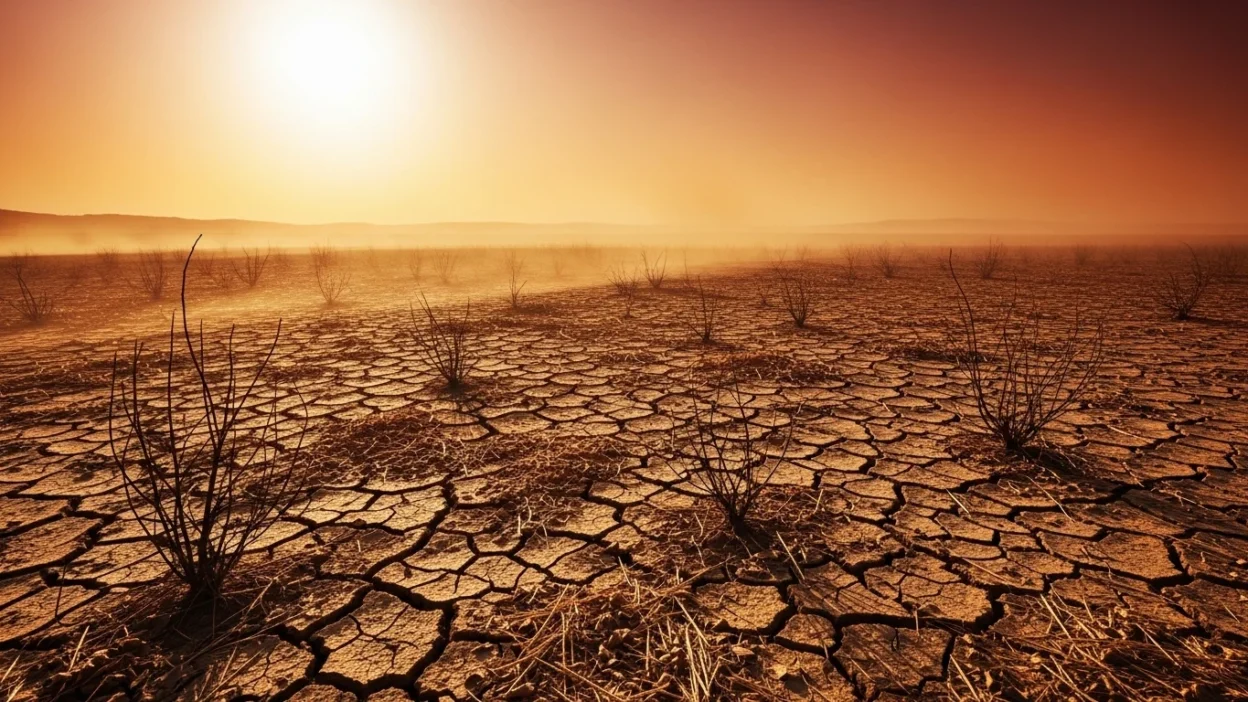
8. As dry as cracked earth
Meaning: Severely dry land.
Explanation: When soil loses water, it cracks.
Example sentences
- The farm field was as dry as cracked earth.
- The lakebed looked as dry as cracked earth.
9. Like a dry twig
Meaning: Very brittle and dry.
Explanation: Twigs snap easily when dry.
Example sentences
- The branch snapped like a dry twig.
- His voice sounded like a dry twig breaking.
10. As dry as chalk
Meaning: Powdery and dry.
Explanation: Chalk has no moisture.
Example sentences
- The wall felt as dry as chalk.
- The air tasted as dry as chalk.
11. Like a sun-baked road
Meaning: Extremely dry from heat.
Example sentences
- The ground was like a sun-baked road.
- My lips felt like a sun-baked road.
12. As dry as straw
Meaning: Rough and dry.
Example sentences
- The grass looked as dry as straw.
- The hay felt as dry as straw in the barn.
13. Like a dried riverbed
Meaning: Completely without water.
Example sentences
- The valley looked like a dried riverbed.
- My throat felt like a dried riverbed after talking all day.
14. As dry as a biscuit
Meaning: Dry in texture.
Example sentences
- The cake tasted as dry as a biscuit.
- The bread felt as dry as a biscuit.
15. Like a desert wind
Meaning: Dry and harsh.
Example sentences
- The air blew like a desert wind across the plains.
- Her voice sounded like a desert wind.
16. As dry as hay
Meaning: Rough and moisture-free.
Example sentences
- The grass was as dry as hay in the heat.
- My hands felt as dry as hay.
17. Like a thirsty land
Meaning: Very dry land needing water.
Example sentences
- The soil waited like a thirsty land for rain.
- The field looked like a thirsty land.
18. As dry as a cork
Meaning: Completely moisture-free.
Example sentences
- The wood felt as dry as a cork.
- My throat became as dry as a cork.
19. Like a desert path
Meaning: Very dry and dusty.
Example sentences
- The trail looked like a desert path.
- The road stretched like a desert path under the sun.
20. As dry as ashes
Meaning: Powdery and completely dry.
Example sentences
- The soil felt as dry as ashes.
- The old leaves crumbled as dry as ashes.
Practical Exercise
Questions
- Complete the simile:
“The ground was as dry as a ______.” - Which sentence contains a simile?
a) The land was dry.
b) The land was as dry as dust. - Complete the sentence:
“My throat felt like a ______.” - Identify the simile in this sentence:
“The soil was as dry as cracked earth.” - Complete:
“The grass was as dry as ______.” - Which phrase is a simile?
a) A dry day
b) Like a desert wind - Complete:
“The field looked like a ______.” - What words usually create similes?
- Complete:
“The bread tasted as dry as ______.” - Write your own simile for dry.
Answers with Explanation
- Bone / dust
These comparisons describe extreme dryness. - B
It compares using as. - Dried riverbed
This shows a strong image of dryness. - As dry as cracked earth
The comparison forms the simile. - Straw
Straw is naturally dry. - B
It uses the word like. - Dried riverbed
This shows a lack of water. - Like and As
These are common simile words. - Biscuit
This shows dry texture. - Example: “The land was as dry as a desert.”
Conclusion
Similes make writing clearer, richer, and more imaginative. Instead of using simple descriptions, writers use creative writing similes to paint vivid pictures in the reader’s mind.
The meaning of similes is simple—they compare two things using like or as. These comparisons help readers understand feelings, textures, and scenes more easily.
As you saw in these examples of similes, describing dryness becomes much more interesting with phrases like “as dry as a bone” or “like a desert wind”. Now it’s your turn to practice. Try creating your own simile sentences when describing weather, food, or even emotions. The more you practice how to use similes in writing, the more engaging and creative your writing will become.